
The die
The grid is a die, the piece of silicon a chip is built on. Signals enter and leave at the pads on its edge. The scope on the right shows each input, and the band each output must stay inside.
Puzzle 1 of 100
Connect pad A to pad Y with metal so that Y shows the same signal as A.
The grid is a die, the piece of silicon a chip is built on. Signals enter and leave at the pads on its edge. The scope on the right shows each input, and the band each output must stay inside.
Metal carries a signal with almost no resistance. Squares of one layer join wherever their edges touch.
Choose Metal and paint a row of squares from A to Y. Squares join where their edges touch.
Look along the row between A and Y. The marked square is one place on a direct route.
Select Metal and draw a continuous path between the two pads. The path may bend; every part must stay connected.
These hints describe one valid approach. Other drawings can pass.
This is the game's reference drawing for the puzzle. It meets the goal and passes the design rules. Other drawings can pass as well.
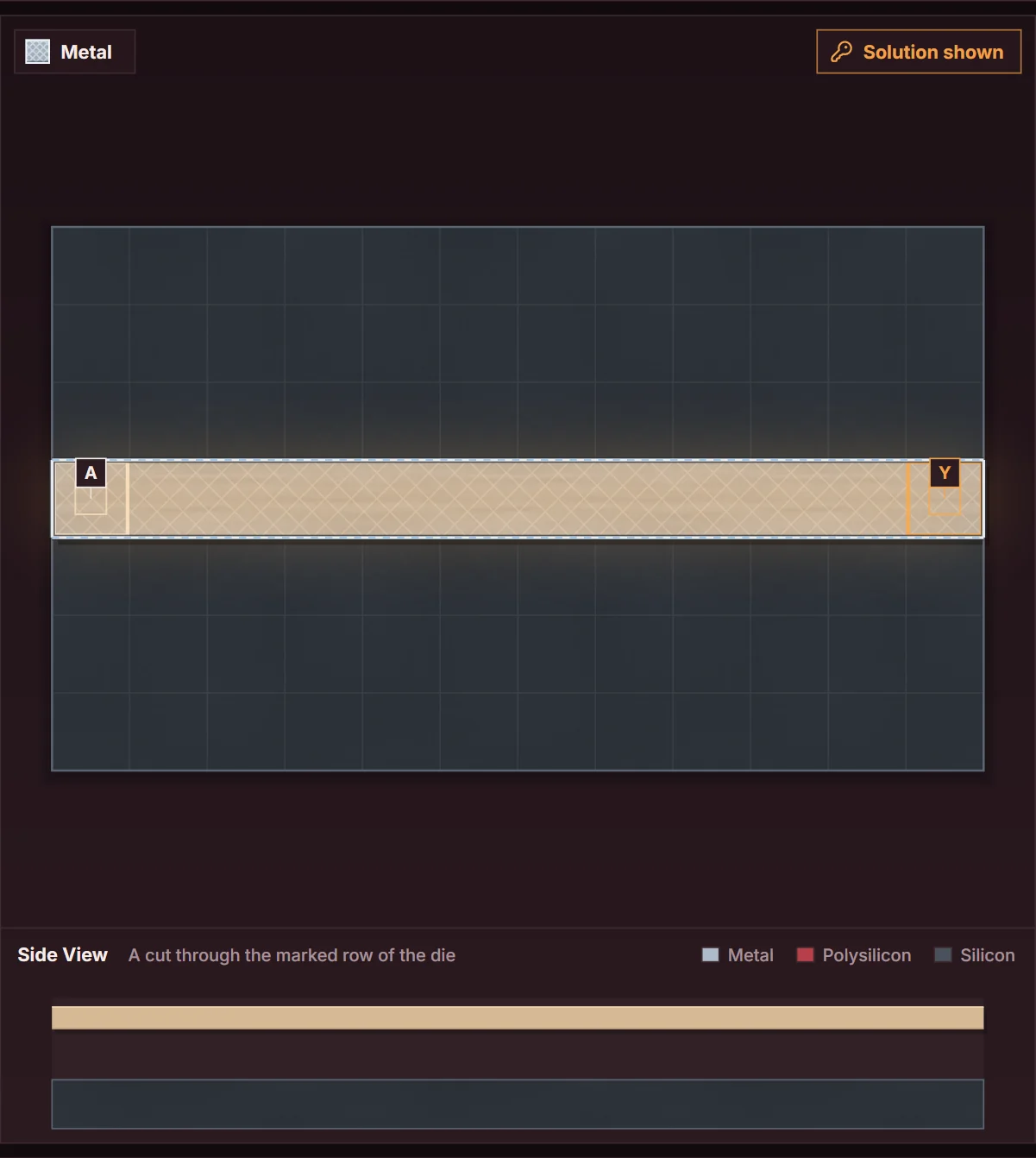
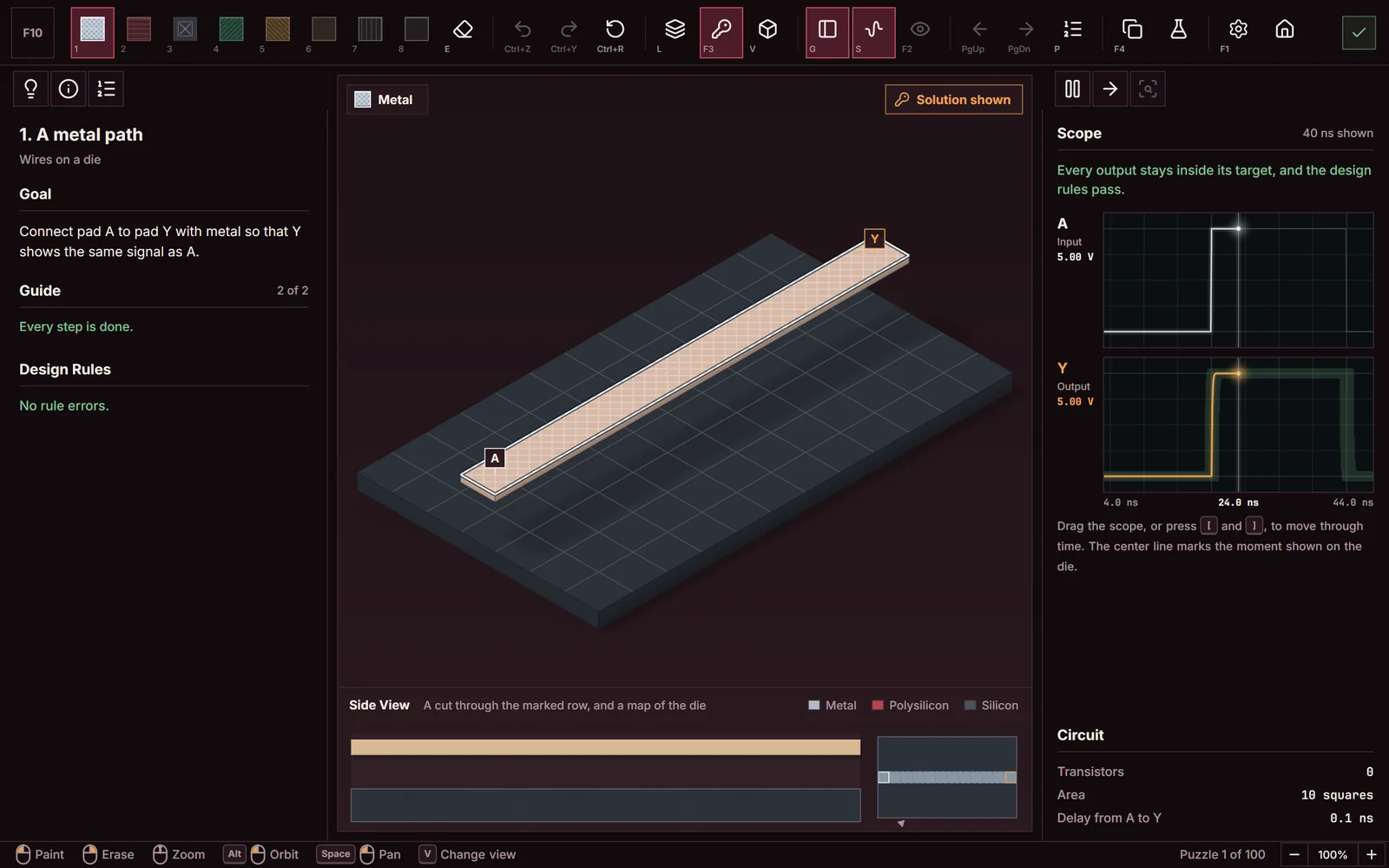
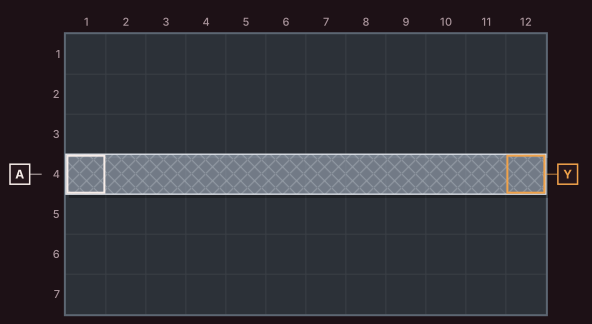
A continuous conducting route lets the output follow the input. The route does not have to match the example drawing.