
Polysilicon
Polysilicon is a second conductor. It lies on a level below metal and resists current more than metal does.
Puzzle 4 of 100
Connect A to Y. This puzzle offers only Polysilicon and Contact.
Polysilicon is a second conductor. It lies on a level below metal and resists current more than metal does.
A contact is a hole through the insulation, filled with metal, that joins the metal above to the layer below. Placing a contact also paints metal over it.
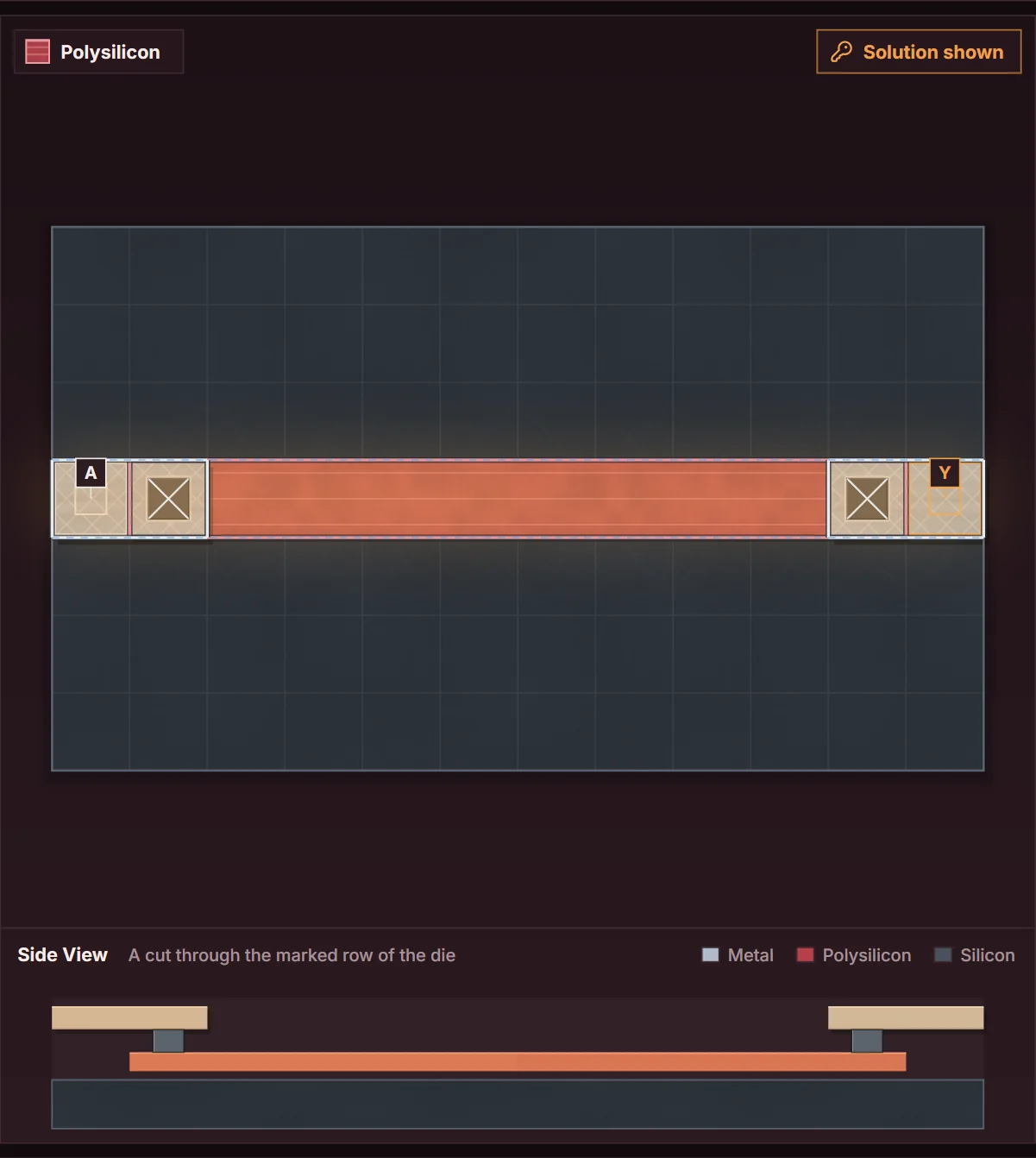
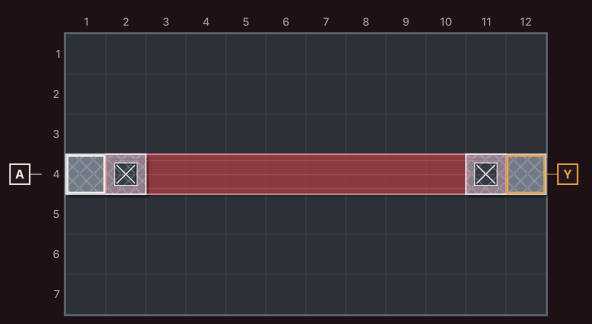
Paint a row of polysilicon between the two pads, then place a contact on the square at each end. A contact joins the pad's metal to the polysilicon under it.
Look between the two end contacts. The marked square is in the polysilicon strip.
Join the contacts with polysilicon. Keep metal off the middle of the strip so that it does not bypass the resistance.
These hints describe one valid approach. Other drawings can pass.
This is the game's reference drawing for the puzzle. It meets the goal and passes the design rules. Other drawings can pass as well.
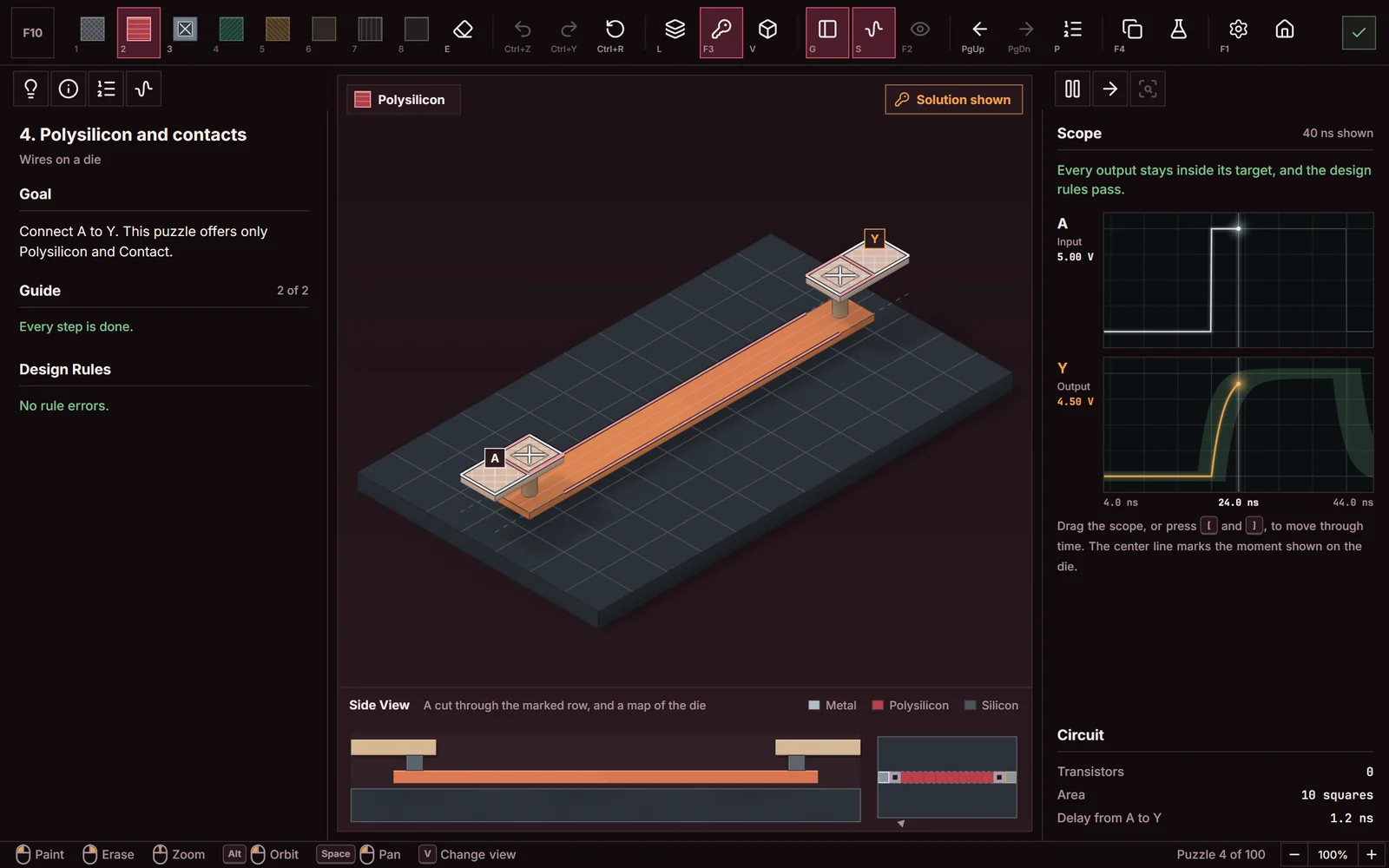
Polysilicon contributes resistance as well as capacitance. The measured output records their combined effect in this drawing.
Before records your passing drawing. Widen part of its polysilicon strip by adding a parallel row that touches it. Keep the end contacts and metal routes unchanged. Compare the output delay and waveform. Resistance and capacitance both change, so use the measured result rather than assuming that wider is always faster.
The experiment is optional. It does not change the puzzle target.